
Baku · Gobustan · Absheron
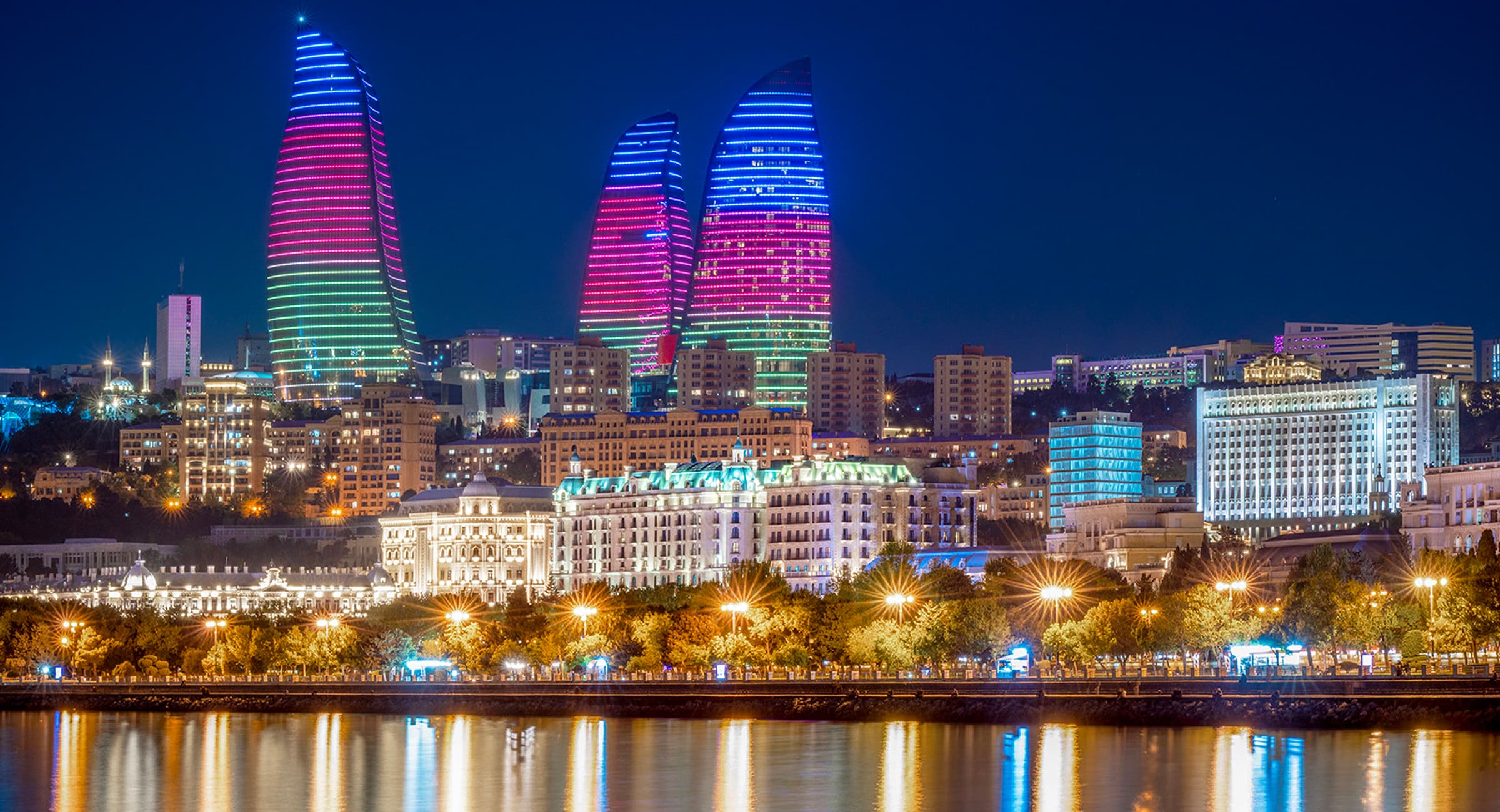
Baku – The flames swaying in the wind
Five days to discover Baku's Old City, the rock art of Gobustan, the fire landscapes of Absheron and the museums beside the Caspian Sea. Programme with an English-speaking guide. Ask our team for a private proposal for your agency.
5 days · 4 nights
Upcoming departures
New dates on request
No upcoming dates are published for this programme yet. Contact our team to discuss your plans.
Explore the itinerary
Travel Program
Arrival at Baku airport. Optional transfer to the hotel and overnight in the city.
The tour starts at 09:15.
Breakfast and departure for Gobustan, around 60 km from Baku. Gobustan’s UNESCO-listed rock-art landscape preserves thousands of engravings on the boulders of a semi-desert plateau. Hunters, wild animals, boats and groups of dancers record how successive communities lived, travelled and expressed their beliefs. The museum explains these images in the context of prehistoric settlements and changes in the environment, making the small figures on the stone easier to understand.
Visit the Gobustan Museum to discover the region's rock art. Return to Baku and walk through Icherisheher, the Old City, among historic buildings and former residences of the oil barons. Icherisheher is Baku’s inhabited walled city, recognised by UNESCO together with the Shirvanshahs’ Palace and Maiden Tower. Its narrow lanes connect mosques, caravanserais and bathhouses that served the medieval trading town. The fifteenth-century palace complex was the royal residence of the Shirvan rulers; the cylindrical Maiden Tower, with its thick stone walls, is one of the city’s oldest landmarks. Their architecture shows Baku’s history before the oil boom reshaped the surrounding streets.
Visit the Palace of the Shirvanshahs, the Maiden Tower, the ruins of St Bartholomew's Church, the old hammam and historic mosques. Lunch included. Dinner at leisure and overnight in Baku.
Breakfast and a visit to the Baku viewpoint overlooking the Caspian bay. Excursion to the Absheron Peninsula to visit the Ateshgah Fire Temple in Surakhani and Yanar Dag, the Burning Mountain. Ateshgah’s stone enclosure surrounds a central fire altar and the small cells once used by pilgrims. Its inscriptions and courtyard recall the Hindu and Sikh merchants who travelled to Absheron, alongside the region’s older fire-worship traditions. The surviving complex largely dates to the seventeenth and eighteenth centuries, when Baku’s trade routes brought visitors from the Indian subcontinent. At Yanar Dag, natural gas escaping through the hillside feeds a line of flames at the base of the rock. The fire comes from the ground rather than a volcanic eruption, offering a visible explanation of Azerbaijan’s “Land of Fire” name. The low ridge and exposed rock make the phenomenon easy to distinguish from the fire altar at Ateshgah.
On returning to Baku, visit the Heydar Aliyev Center (exterior visit only), designed by Zaha Hadid, and Yashil Bazaar, known for fresh produce, spices and local specialities. Zaha Hadid’s Heydar Aliyev Center is recognised by its continuous white curves: the building’s surface rises from the plaza and folds into the roof, avoiding the straight lines of a conventional façade. From outside, the changing angles reveal how the architecture and landscaped space form one composition. This stop concerns the exterior, without promising entry to the exhibitions. Yashil Bazaar’s stalls display seasonal fruit, herbs, nuts, dried fruit and fragrant spices. Pomegranates, tea and preserves are among the products associated with Azerbaijani kitchens. The market shows how produce from different regions reaches Baku and offers a close look at everyday shopping, from stacked baskets of fruit to the small stalls of pickles and local specialities.
Lunch included and overnight in Baku.
After breakfast, visit the YARAT contemporary art space and the Carpet Museum. The Carpet Museum’s rolled-carpet shape announces the collection inside. Regional weaving traditions can be distinguished through their colours, geometric borders and floral motifs; flat-woven pieces and knotted carpets show different techniques. The displays explain the role of carpets in homes and ceremonies, turning a familiar decorative object into a record of local craftsmanship. YARAT presents contemporary art in a converted industrial building by the waterfront. Exhibitions use painting, installation, photography and moving images to explore modern life and ideas from Azerbaijan and the wider region. It offers a different perspective from the historical collections elsewhere in Baku, with the particular works varying as exhibitions change.
Walk along the Caspian seafront boulevard and have lunch at a local restaurant. In the afternoon, visit the National Museum of History of Azerbaijan and the house of Haji Zeynalabdin Taghiyev. The National History Museum occupies the former mansion of oil entrepreneur and philanthropist Haji Zeynalabdin Taghiyev. Archaeological objects, weapons, coins and household items trace different periods of Azerbaijan’s history. The restored family rooms also show how Baku’s oil wealth was expressed in decorated ceilings, reception halls and the furnishings of a late nineteenth-century residence.
Return to the hotel and overnight in Baku.
Breakfast at the hotel and free time until the airport transfer, according to the flight schedule. Rooms must be vacated before 12:00.
Programme routeOpen the route map
VATRAVEL · Full journey
Your journey, on the map
Select a day to explore the main stops of your programme.
Route overview: arrows show the order of visits, not driving or hiking directions. See the full programme for all stops.
